

What Happens At A DUI Checkpoint In Pennsylvania And What Are Your Rights?
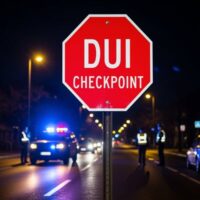
You are driving home late on a Friday night when you spot flashing lights up ahead and a line of cars slowing to a stop. It is a DUI checkpoint. Your pulse quickens, even if you have not had a single drink. What are you actually required to do, and what rights do you still have in that moment?
Are DUI Checkpoints Even Legal in Pennsylvania?
Yes, they are, but with important limits. Under 75 Pa.C.S. § 6308(b), Pennsylvania law permits police to stop vehicles as part of a “systematic program of checking vehicles or drivers.” Courts have interpreted this language as authorizing sobriety checkpoints, and the Pennsylvania Supreme Court has upheld them, provided they are conducted properly.
That last part matters a great deal. A checkpoint that does not meet the legal requirements can be challenged, and that challenge can have consequences for any case that flows from an unlawful stop.
What the Police Are Required to Do
Pennsylvania courts, through cases known as the Tarbert-Blouse guidelines, have set firm rules for how a DUI checkpoint must be run. The decision to set up a checkpoint has to come from police administrators, not individual officers making judgment calls on the spot. Officers must use a neutral, objective standard for deciding which vehicles to stop. They are not allowed to single out drivers based on a hunch. The checkpoint location must be chosen based on data showing a history of DUI-related incidents in that area. The public must receive advance notice of the checkpoint through signs, media, or other means. Stops must be brief. Officers cannot search your vehicle without your consent, a warrant, or probable cause.
What You Are and Are Not Required to Do
When you are stopped, you are required to provide your driver’s license, vehicle registration, and proof of insurance. You must also exit the vehicle if an officer instructs you to do so. Beyond that, the picture gets more nuanced.
- Field sobriety tests, such as the walk-and-turn, one-leg stand, and horizontal gaze nystagmus test, are voluntary before an arrest.
- The portable preliminary breath test at the roadside is also generally voluntary.
- You have the right to remain silent and are not obligated to answer questions about where you have been or what you have been doing.
- If officers ask to search your vehicle, you can decline unless they have a warrant or probable cause.
One area where the rules change significantly is the post-arrest chemical test. Pennsylvania’s implied consent law means that if you are arrested for DUI and then refuse a breath, blood, or urine test, you face an automatic license suspension, regardless of whether you are ultimately convicted.
Facing DUI Charges After a Checkpoint Stop? Talk to an Attorney at Our Office
Being stopped at a checkpoint does not automatically mean a DUI charge, and a DUI charge does not automatically mean a conviction. How the checkpoint was conducted, how officers interacted with you, and whether all legal requirements were met are all potentially relevant to your case. If you were arrested following a DUI checkpoint stop in the Pittsburgh area, don’t hesitate to contact The Law Offices of Gary E. Gerson. Our Pittsburgh DUI lawyers are ready to review what happened and discuss your options. Reach out today for a free, confidential consultation.
Source:
legis.state.pa.us/cfdocs/legis/LI/consCheck.cfm?txtType=HTM&ttl=75&div=0&chpt=63&sctn=8&subsctn=0